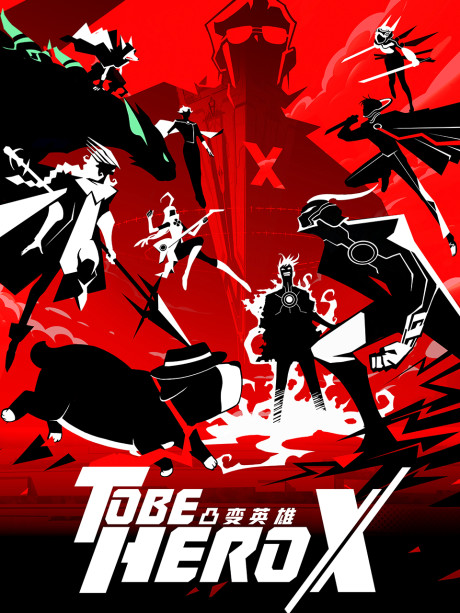
The narrative of To Be Hero X unfolds in a reality where human faith directly shapes superhuman abilities. Within this society, if a person convinces the public that they possess a specific capability, such as flight, that power manifests physically. Conversely, if public trust fades, the individual loses their abilities entirely.
This volatile system relies on quantifiable data reflecting trust values, which are conveniently displayed on everyone's wrist. Ordinary citizens can elevate themselves to superhero status simply by accumulating enough of this public trust. However, because public opinion is notoriously fickle, the journey of any hero is fraught with constant uncertainty.
A structured hierarchy governs these empowered figures, driven by regular evaluations. Every two years, the leading heroes congregate to participate in a high-stakes tournament. The outcomes of these competitive events directly dictate the adjustment of their official trust rankings. At the very apex of this fiercely contested hierarchy stands the reigning champion known as X, the ultimate figure holding the highest trust value in the entire world.
What happens at the end of To Be Hero X?
Key takeaways
Superpowers in To Be Hero X are generated entirely by public faith and quantified as trust data on people's wrists.
Heroes participate in a biennial tournament every two years to adjust their official rankings based on shifting public trust.
The ultimate position of number one hero is designated by the title of X, representing the pinnacle of collective belief.
The source material for To Be Hero X focuses heavily on the structural mechanics of the biennial tournament and the ongoing competition for the top ranking rather than detailing a definitive narrative conclusion. As the narrative builds toward its competitive peaks, the top heroes gather to settle their standing through structured bouts where trust rankings are officially recalculated. Because the provided information does not outline specific final matches, character fates, or a conclusive resolution to the tournament, the story leaves the ultimate outcome of who claims or retains the title of X completely open.
One reading of this structural focus is that the system itself acts as the primary antagonist, continuously pressuring heroes to maintain public approval in an unstable environment. The closing segments described in the available sources emphasize the relentless nature of the trust economy rather than a final victors' speech or a permanent closure to the hero rankings. Without further canonical details regarding the final moments of the tournament, viewers are left to interpret the eternal struggle of faith and data as an ongoing cycle.
The narrative avoids giving a definitive final image in the provided source material, instead highlighting the cyclical nature of the biennial gatherings where rankings fluctuate endlessly based on shifting public perception. One interpretation is that the lack of a closed resolution mirrors the unpredictable and infinite loop of public trust, where no single hero can secure their position permanently. Furthermore, the mechanics dictating how powers are gained and lost suggest a perpetual state of tension among all participants. Ultimately, because the source facts do not specify the exact events of the final act, the story leaves the final fate of X and the challengers open to interpretation, prioritizing the thematic weight of the faith-based society over a neat narrative wrap-up.
What does the ending of To Be Hero X mean?
The primary theme of To Be Hero X centers on the volatile nature of public opinion and the commodification of belief. By quantifying faith into data points displayed on wrists, the story explores how modern society reduces human worth and capability to measurable metrics. This system suggests that identity and power are not intrinsic but are instead entirely dependent on external validation and collective perception.
The biennial tournament reinforces a theme of relentless competition, where individuals must constantly perform to retain their societal standing. Furthermore, the premise highlights the fragility of fame and authority. Because powers vanish the moment people stop believing, no hero possesses true security, illustrating that systems built purely on popularity are inherently unstable and prone to manipulation.
One reading is that the narrative serves as a commentary on celebrity culture and mass media influence, where public adoration is both the source of extraordinary capability and a heavy chain that restricts true freedom. The title of X itself represents the ultimate symbol of this phenomenon, embodying an elusive ideal that everyone strives for yet nobody can permanently control within the shifting tides of public trust.
Average audience ratings from the source database. Click a title to read its ending explained.
To Be Hero X ending FAQ
How do people get superpowers in To Be Hero X?
Superpowers are granted entirely through public faith and belief. If enough people believe an ordinary person can perform a specific feat, like flying, that capability physically manifests. This collective trust is measured and tracked as data values displayed directly on everyone's wrist, allowing everyday individuals to transform into functional superheroes.
What happens if people stop believing in a hero?
If the public loses faith or stops believing in a hero, that individual immediately loses their superpowers. Because the entire power system relies strictly on ongoing external validation, heroes have no inherent or permanent abilities, making their strength completely dependent on the shifting and fickle nature of public opinion.
Who is X in the rankings?
The designation of X belongs to the number one hero who sits at the very top of the official trust rankings. This individual possesses the highest accumulated trust value in the entire world, representing the ultimate pinnacle of public faith and competitive success within the biennial hero tournament structure.
How often do the heroes compete?
The top heroes gather to compete in an official tournament every two years. The primary purpose of this biennial event is to evaluate their current standing and officially adjust their trust rankings based on the data collected from public faith and recent performances in the society.
Does the story provide a definitive conclusion to the tournament?
The available source material does not detail the specific outcomes or final matches of the competition. Because official details regarding the conclusion are absent, the narrative leaves the ultimate resolution of the tournament and the final fate of the top ranking completely open to interpretation.
JoJo's Bizarre Adventure: Diamond is Unbreakable ending explained
It's the year 1999, 11 years after Jotaro Kujo's desperate fight against DIO in Egypt. Jotaro meets with Josuke Higashikata, the illegitimate son of his grandfather Joseph Joestar.