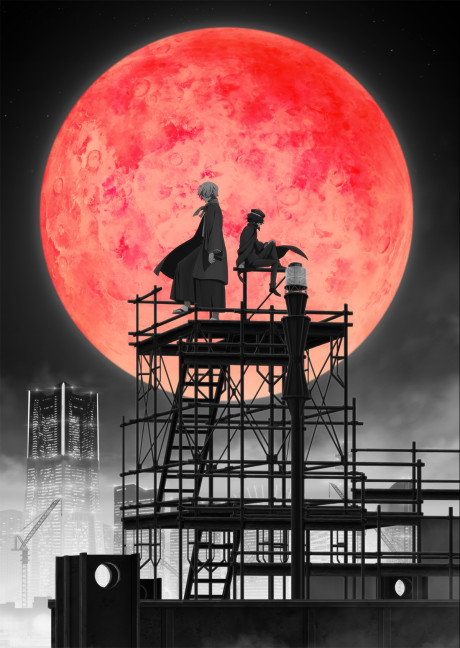
Long ago, the ritual performed by Yakou Tsuchimikado caused the catastrophic Great Spiritual Disaster, plunging Japan into turmoil. To combat ongoing supernatural threats, the Onmyo Agency was subsequently established to monitor and eliminate spirits and demons. In the present day, onmyodou magic has been modernized and integrated into medicine and technology.
Despite belonging to the distinguished Tsuchimikado family, Harutora is born without any spiritual power, leaving him unable to accomplish magical feats. Content with living a normal and peaceful life, his perspective shifts due to a past promise with his engaged childhood friend Natsume, the family heir and supposed reincarnation of Yakou. When rogue elements within the Onmyo Agency try to replicate the ancient tragedy, the peaceful existence shatters.
Driven to protect those around him, Harutora chooses to abandon his ordinary life. He steps directly into the supernatural conflict, deciding to fight alongside Natsume as her dedicated shikigami supporter to stop the looming disaster from destroying their world entirely.
What happens at the end of Tokyo Ravens?
Key takeaways
Harutora overcomes his lack of spiritual power by becoming Natsume's loyal shikigami supporter.
The narrative centers on preventing a repeat of the historical Great Spiritual Disaster.
The ultimate fate of the characters and the world leaves room for interpretation based on the source text.
As the narrative of Tokyo Ravens reaches its final act, the looming threat orchestrated by rogue members of the Onmyo Agency comes to a critical head. These hostile individuals actively attempt to recreate the disastrous events that caused Japan's historical downfall, directly linking back to the infamous Taizan Fukun Ritual originally performed by the notorious Yakou Tsuchimikado. Harutora, who previously believed he was entirely powerless and permanently sidelined from the occult world, steps up to alter this grim trajectory.
Embracing his childhood promise and deep bond with Natsume, the Tsuchimikado family heir and supposed reincarnation of Yakou, Harutora takes matters into his own hands. He enters the supernatural battlefield directly, taking on the role of Natsume's shikigami supporter. This final confrontation pits the duo directly against the dangerous factions trying to repeat the catastrophe of the Great Spiritual Disaster, an incident that continues to haunt the entire Japanese continent.
Because the available source details do not explicitly outline the final blows, specific dialogue, or the ultimate physical aftermath of this climactic clash, the story ultimately leaves the definitive resolution of the battle open. Rather than providing a fully detailed, closed conclusion within the supplied source text, the narrative instead emphasizes Harutora's decisive choice to stand by Natsume's side against the Onmyo Agency conspirators, shifting from a powerless bystander to an active participant in the occult conflict. The concluding moments highlight this enduring partnership, leaving the broader implications of their ongoing struggle against modern spiritual disasters open to interpretation while the core focus remains firmly on their unified front against those who wish to plunge the modernized world of onmyodou back into total ruin.
What does the ending of Tokyo Ravens mean?
The story explores themes of destiny, responsibility, and overcoming perceived limitations. Harutora begins his journey as an ordinary person from a distinguished onmyoji family, seemingly locked out of the occult world due to his complete lack of spiritual power. His evolution challenges the idea that birth determines one's entire capability, as he ultimately steps up to act as Natsume's shikigami supporter.
Another major theme revolves around the dangerous pursuit of power through history, exemplified by the legacy of Yakou Tsuchimikado and the devastating fallout of the Taizan Fukun Ritual. The Onmyo Agency represents institutional attempts to monitor and control these supernatural forces, yet internal corruption threatens to repeat past mistakes and trigger another Great Spiritual Disaster. By choosing to fight rather than accept a passive role, Harutora redefines his purpose. One reading of the conclusion is that personal bonds and active agency can confront systemic threats, even if the ultimate resolution of the supernatural conflict is left open by the narrative.
Average audience ratings from the source database. Click a title to read its ending explained.
Tokyo Ravens ending FAQ
Who is Harutora in Tokyo Ravens?
Harutora is a member of the Tsuchimikado branch family who was born without any spiritual power, making him unable to use onmyodou magic. Despite wanting a normal and peaceful life, he eventually takes matters into his own hands and fights alongside Natsume as her shikigami supporter against rogue factions within the Onmyo Agency.
What caused the Great Spiritual Disaster?
The Great Spiritual Disaster was caused by an infamous ritual known as the Taizan Fukun Ritual, which was performed long ago by Yakou Tsuchimikado. Although intended to bring out Japan as a formidable force, the ritual went horribly wrong and triggered the catastrophic event that continues to haunt the entire Japanese continent.
Why does Harutora become Natsume's shikigami?
Harutora becomes Natsume's shikigami because he wants to protect her and take matters into his own hands when a group of people from the Onmyo Agency attempt to recreate the tragedy of the Great Spiritual Disaster. This choice allows him to fight by her side despite lacking his own innate spiritual abilities.
Does Harutora have any magical power at the start?
No, Harutora was born with no spiritual power at all despite belonging to a distinguished family of onmyouji. Because he cannot accomplish anything magical, his life initially lacks meaning until he makes a defining choice to act as Natsume's shikigami supporter during the escalating supernatural crisis.
What is the role of the Onmyo Agency?
The Onmyo Agency was established to monitor supernatural activity in the area and to combat any spirits or demons that make their way into the real world. However, some people within the agency attempt to recreate the historical tragedy, forcing Harutora and Natsume to take action against them.
No longer concerned with military affairs, Yukichi Fukuzawa intends to act as a lone bodyguard-for-hire, making use of his deadly swordsmanship. However, things are not going as pl