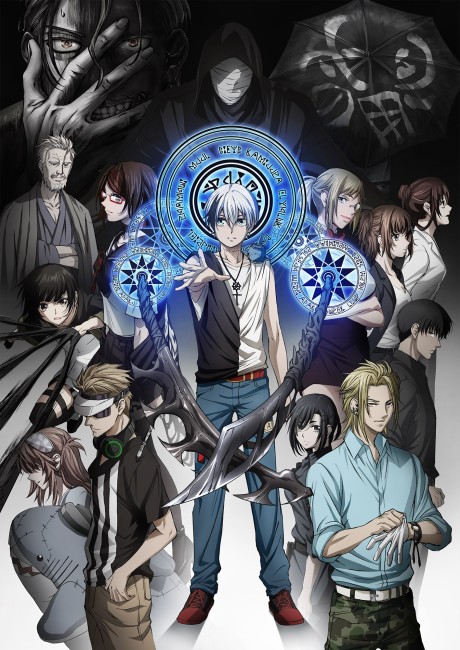
In a distant realm, a legendary conflict reaches its climax as the brave hero Sir Shagrua Edith Lugrid corners a notorious necromancer referred to as the Corpse God. Facing imminent defeat, the dark sorcerer deploys an unexpected and powerful reincarnation magic skill as a desperate final gambit. This surprise maneuver completely catches the heroic fighter off guard.
Instead of perishing, the Corpse God's soul crosses worlds and awakens in modern-day Shinjuku. He finds himself inhabiting the physical body of a young boy named Polka Shinoyama. Crucially, this vessel has just suffered a fatal wound, specifically having its throat slit by an assassin.
Rather than engaging in further apocalyptic conflicts, the necromancer evaluates his new surroundings. Having yearned for tranquility during his previous existence, he decides to embrace this fresh start. Adopting the identity of the deceased Polka Shinoyama, the former dark sorcerer begins navigating the unfamiliar urban landscape. With the help of a local woman named Clarissa and her loyal subordinates, he successfully integrates himself into the dangerous Shinjuku underworld, setting the stage for his new chapter.
What happens at the end of Dead Mount Death Play?
Key takeaways
The story follows a powerful necromancer known as the Corpse God who flees his original world to escape a hero.
Using reincarnation magic, his soul transfers into the body of a modern Shinjuku boy named Polka Shinoyama.
Seeking the peaceful life he always wanted, the Corpse God adopts Polka's identity and enters the Shinjuku underworld.
Because the provided source material concludes abruptly at his integration into the underworld, the ultimate resolution is left open.
Since the provided source material concludes with the necromancer's initial integration into the urban underworld, the narrative leaves the ultimate fate and final scenes open. Rather than detailing a definitive climax, the story centers on the Corpse God's transition from a fantasy battlefield to the bustling streets of modern Shinjuku. The pivotal sequence involves his escape from Sir Shagrua Edith Lugrid via reincarnation magic, which lands his soul directly inside the mortal shell of Polka Shinoyama.
Because Polka's throat was freshly slit by an assassin, the Corpse God immediately inherits a precarious physical situation upon arrival. Yet, he quickly adapts by utilizing his dark arts and wits. As he chooses to pursue the peaceful life that eluded him in his original realm, he consciously steps away from his past as a feared sorcerer.
His alliance with Clarissa and her subordinates marks the boundary where the available chronicle pauses. The narrative does not provide a traditional final battle or a conclusive resolution involving the hero Sir Shagrua Edith Lugrid following him across worlds. Instead, the final impression left by the source text is one of quiet transition rather than closure.
The Corpse God secures his new identity, establishes local criminal connections for survival and stability, and settles into the shadows of Shinjuku. Without further canonical details regarding how his quest for peace ultimately concludes, or whether his past catches up to him, the story leaves these developments entirely open for interpretation. The closing focus remains firmly on this strange new beginning, where a former tyrant seeks ordinary tranquility amidst urban chaos, supported by underworld allies he barely knows. The narrative purposefully halts its progression at this foundational juncture, ensuring that readers must ponder what happens next in the quiet underworld of Shinjuku.
What does the ending of Dead Mount Death Play mean?
The narrative prominently explores the themes of transformation, second chances, and the pursuit of inner peace. In his previous existence, the Corpse God was defined entirely by his dark sorcery and the relentless warfare waged against him by heroes like Sir Shagrua Edith Lugrid. By using reincarnation magic to cross into modern-day Shinjuku and inhabit the broken body of Polka Shinoyama, he is handed an unprompted opportunity to rewrite his destiny.
One interpretation of the story is that it subverts traditional fantasy tropes by having the ultimate evil entity reject malice in favor of a quiet, ordinary life. Rather than seeking world domination, he desires tranquility, demonstrating a profound internal shift. Furthermore, his reliance on Clarissa and her subordinates highlights themes of unexpected camaraderie and adaptation, as a fantasy necromancer learns to survive within a modern criminal underworld. Because Dead Mount Death Play ends abruptly with his integration into Shinjuku society, these thematic explorations remain intentionally unresolved, inviting audiences to reflect on whether a creature born of dark magic can genuinely escape his past and find true peace in an entirely different reality.
How Dead Mount Death Play rates against similar titles
Average audience ratings from the source database. Click a title to read its ending explained.
Dead Mount Death Play ending FAQ
Who is the main protagonist of Dead Mount Death Play?
The narrative follows a powerful necromancer known as the Corpse God. After escaping defeat in his original realm using reincarnation magic, his soul inhabits the body of a modern Shinjuku boy named Polka Shinoyama, where he seeks a peaceful life.
What happens to Polka Shinoyama before the Corpse God arrives?
Just before the Corpse God's soul transfers into his body, the young boy named Polka Shinoyama suffers a fatal injury when an assassin slits his throat. This leaves his physical vessel vulnerable for the dark sorcerer to take over.
Why does the Corpse God use reincarnation magic?
Facing imminent defeat against the hero Sir Shagrua Edith Lugrid in his original world, the Corpse God deploys this unique magic skill as a desperate final gambit. This unexpected move allows him to escape death and cross over into a brand-new reality.
Who helps the Corpse God integrate into Shinjuku?
After arriving in modern-day Shinjuku and adopting Polka Shinoyama's identity, the former necromancer receives crucial assistance from a local woman named Clarissa alongside her loyal subordinates, successfully helping him navigate the unfamiliar urban underworld.
Does the story provide a definitive final resolution?
Based on the provided source materials, the narrative concludes abruptly right after the Corpse God successfully integrates into the Shinjuku underworld. Because of this, the ultimate fate of the characters and the final outcome of his quest are left completely open.
As the Fourth Holy Grail War rages on with no clear victor in sight, the remaining Servants and their Masters are called upon by Church supervisor Risei Kotomine, in order to band