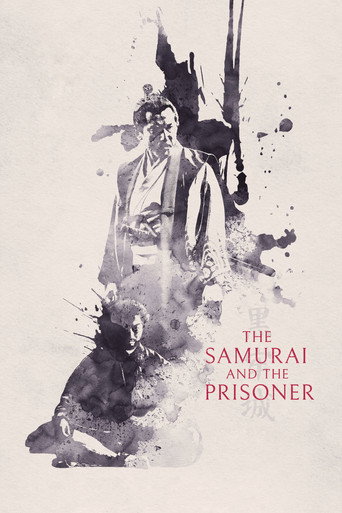
The Samurai and the Prisoner plot recap, spoiler-light
Set in 1578, the film The Samurai and the Prisoner follows the merciful lord Araki Murashige as he rebels against the brutal warlord Oda Nobunaga and barricades himself inside Arioka Castle. As Nobunaga lays siege to the fortress, Murashige imprisons the strategist Kuroda Kanbei for urging surrender. Soon, a series of baffling crimes and murders disrupt the castle's fragile stability.
From the mysterious death of a young hostage to disputed battle kills and stolen treasures, tension mounts among the diverse factions inside the walls. Murashige repeatedly consults the captive Kanbei to decipher clues and identify culprits. Meanwhile, expected reinforcements from Mōri Terumoto fail to arrive, and internal faith among the vassals begins to crumble as winter shifts into spring and summer.
Murashige attempts to navigate shifting allegiances, secret messages, and betrayals while keeping the fortress from tearing itself apart from the within. By autumn, the situation becomes entirely untenable as external pressures mount and the inner circle grows increasingly fractious, setting the stage for a dramatic reckoning.
What happens at the end of The Samurai and the Prisoner?
Lady Chiyoho is revealed as the mastermind behind the castle's internal mysteries, driven by her traumatic memories of past massacres.
Kanbei assists Murashige in unraveling the castle's secrets and helps devise a desperate escape route to Harima.
Murashige ultimately chooses to abandon Arioka Castle and his worldly treasures, leaving his loyal retainers behind to surrender.
The story leaves the exact consequences of Murashige's final departure open, though historical epilogues note his later survival as a tea master.
As the narrative reaches its autumn climax in The Samurai and the Prisoner, Kanbei helps Murashige put together the final pieces of the puzzle, deducing that Lady Chiyoho orchestrated several of the castle's tragedies, including Jinen's death, the swapped heads, and the shooting of Notō. When confronted, Chiyoho explains her actions through the lens of the brutal siege of Nagashima, wishing to prove that divine punishment can touch anyone. Following this revelation, Murashige visits Kanbei in the dungeon, where the strategist shares a drink and suggests an escape route to Harima via the sea to find Mōri.
Murashige recognizes that fleeing will disgrace him, yet he agrees to the plan anyway, instructing his retainers to surrender peacefully and claim he abandoned them if the fortress falls. One by one, his companions express that their ultimate loyalty is to the castle rather than to Murashige himself, choosing to return inside. Traveling with only a single companion, Murashige embarks on his journey away from the besieged fortress.
A closing epilogue text reveals that Nobunaga successfully seized Arioka Castle following this departure, but was killed three years later during the Honnō-ji Incident instigated by Akechi Mitsuhide. The story concludes by noting that Murashige survived this turbulent period and eventually lived out his days as a celebrated tea master, closing the narrative with the image of a disgraced lord leaving his past life behind.
What does the ending of The Samurai and the Prisoner mean?
One reading of the ending in The Samurai and the Prisoner centers on the ultimate rejection of worldly ambition and material power. Throughout the narrative, objects like the Tora-saru tea urn serve as symbols of political leverage and worldly treasures used to fuel bloody conflicts. By deciding to treasure his cultural artifacts rather than wielding them as political tools to win wars, Murashige signifies a profound spiritual and personal shift.
Another interpretation explores the heavy cost of loyalty and betrayal in a time of war. The vassals who ultimately choose to remain and surrender to Arioka Castle demonstrate that institutional loyalty often supersedes personal devotion to a specific ruler. Furthermore, Chiyoho's actions highlight the lingering psychological trauma of historical massacres, where surviving violence leaves deep scars that manifest in unpredictable ways.
Ultimately, the resolution examines how individuals find meaning after disgrace. Rather than dying a traditional warrior's death, Murashige transitions into a quiet existence as a tea master, suggesting that peace can sometimes be found only after completely relinquishing one's past identity, power, and status.
How The Samurai and the Prisoner rates against similar titles
Average audience ratings from the source database. Click a title to read its ending explained.
The Samurai and the Prisoner ending FAQ
Who was actually responsible for the mysterious crimes inside Arioka Castle?
With Kanbei's analytical help, Murashige discovers that his wife, Lady Chiyoho, orchestrated several key incidents, including the death of the hostage Jinen, the tampering with the severed heads, and the shooting of Notō, driven by her traumatic memories of the violent siege of Nagashima.
Why does Murashige decide to flee the castle at the end?
Kanbei advises Murashige to seek out Mōri in Harima via a sea route. Murashige understands that this choice will completely disgrace him and ruin his reputation as a warrior, but he chooses this path anyway as his final option to survive and escape the collapsing siege.
What happens to the retainers when Murashige escapes?
Murashige orders his men to surrender peacefully to Oda's forces and to tell anyone that he fled. However, one by one, his companions choose to return to the castle, asserting that their true loyalties lie with the fortress itself rather than with their departing lord.
Does Oda Nobunaga successfully capture Arioka Castle?
Yes, an epilogue card confirms that Oda Nobunaga successfully took the castle after Murashige departed. However, Nobunaga's victory was short-lived, as he was killed three years later during the Honnō-ji Incident.
What becomes of Murashige after the fall of his fortress?
The epilogue reveals that Murashige survived the collapse of his domain and eventually became a famous tea master, trading his life of warfare and political rebellion for a quieter artistic existence.
Diagnosed with Tourette Syndrome at 15, John Davidson navigates his way against the odds through troubled teenage years and into adulthood, finding inspiration in the kindness of o