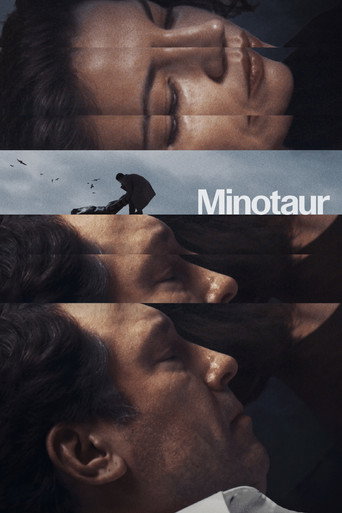
In the Minoan Bronze Age, the oppressive King Deucalion extracts a cruel toll from the settlement of Thena: eight youths are handed over every three years to be devoured by a monstrous divine beast in a massive underground maze. Theo, the devoted son of village chief Cyrnan, remains shattered by the earlier sacrifice of his sweetheart Ffion. When an afflicted seer claims Ffion remains alive deep below ground, Theo willingly exchanges places with a chosen offering to launch a desperate rescue mission.
Transported to the Minoan capital, he enters the labyrinth alongside his close companion Danu, Morna, Tyro, Didi, Vena, Ziko, and Nan. The predator swiftly begins eliminating the helpless prisoners one by one. Though Queen Raphaella seeks to guide the group toward freedom, their plotted escape collapses when her outside accomplice is discovered and slain, forcing the scattered survivors to navigate harrowing tunnels while evading the relentless creature.
What happens at the end of Minotaur?
Key takeaways
Theo destroys the terrifying Minotaur by utilizing a severed horn and the palace's subterranean gas hazards.
Queen Raphaella takes vengeance against her tyrannical brother King Deucalion by suffocating him in the palace ruins.
The deaths of both the beast and the monarch dissolve the Minoan empire and establish Theo as an enduring legendary hero.
Deep within the labyrinth, Theo discovers the unsettling truth about his mission. Following a map drawn by Turag, a broken survivor from an earlier tribute, Theo tracks down Ffion only to uncover her lifeless body, preserved where toxic gas pooled underground. Soon after, Queen Raphaella finds Theo and confesses the horrific reality: her own mother mated with a beast to birth the Minotaur, and the beast's murder of a Minoan prince was falsely blamed on Thena to justify regular human tributes.
Raphaella orchestrated the prophetess's deceit regarding Ffion specifically to lure a warrior strong enough to slay the creature. As the Minotaur closes in to kill Theo, Tyro heroically throws himself into harm's way, giving Theo precious moments to act. Theo leads the ravenous monster toward the noxious gas vent and sparks an inferno using Ffion's amulet.
Theo and Raphaella plunge into a water pool to endure the raging explosion. When the pair surfaces, the charred beast remains alive and attacks in a frenzy. Theo thrusts one of the monster's own broken horns into its jaws.
Blinded by fury, the charging beast slams directly into a boulder, forcing the horn completely through its skull to finish it off. With the subterranean maze giving way, Theo, Raphaella, Morna, and Turag ascend to the surface world. The fiery underground blast has brought down the royal palace, leaving King Deucalion trapped beneath heavy rubble and mortally injured.
Approaching her abusive brother, Raphaella smothers Deucalion, ending his reign. The story concludes with the complete dissolution of the Minoan empire in the wake of the monarch's and monster's deaths, while Theo earns legendary status for slaying the beast.
What does the ending of Minotaur mean?
The conclusion of Minotaur resolves central conflicts surrounding manufactured tyranny, personal sacrifice, and redemption. Throughout the narrative, the Minoan authority maintains control over subjugated communities by transforming a royal family secret into a religious mandate. The revelation of the Minotaur's lineage underscores how corrupt rulers fabricate external threats to justify the exploitation of weaker peoples.
Theo's transformation highlights the distinction between manipulation and authentic heroism; though lured underground by a deliberate falsehood regarding Ffion, he channels his grief into a resolute effort to protect the living. Moreover, self-sacrifice plays a pivotal role in overcoming terror, as seen through Danu and Tyro willingly offering themselves up so their companions might survive. In parallel, Queen Raphaella's execution of King Deucalion represents the violent dismantling of an abusive monarchy from within.
One reading of the narrative is that systemic oppression inevitably crumbles when the foundational lies sustaining it are exposed to the light. Theo's final triumph signals that true liberation requires confronting both the physical beast and the tyrannical rulers who direct its feeding.
Average audience ratings from the source database. Click a title to read its ending explained.
Minotaur ending FAQ
Does Theo find Ffion alive in the labyrinth?
No, Theo finds Ffion dead. She succumbed to a pocket of toxic subterranean gas long before his arrival. Theo learns that the prophetess lied about Ffion surviving under orders from Queen Raphaella, who needed a brave warrior willing to enter the maze and confront the monster.
How is the Minotaur finally killed?
After surviving a massive gas explosion, the beast charges Theo. Theo jams a severed horn from the monster into its open mouth. As it barrels forward, the creature collides directly with a rock, driving the sharp horn through its head and delivering a fatal wound.
Who survives the events of Minotaur?
Only four individuals make it out of the underground maze alive: Theo, Queen Raphaella, Morna, and the unhinged previous captive Turag. The rest of the youths, including Danu, Tyro, Didi, Ziko, Vena, and Nan, perish during the ordeal.
What happens to King Deucalion at the end?
King Deucalion is crushed under palace debris caused by the underground explosion Theo triggered. Gravely injured and unable to defend himself, he is smothered to death by his sister Raphaella, ending his cruel reign over the region.
What is the true origin of the Minotaur?
Queen Raphaella reveals her mother engaged in bestiality to produce a living god, giving birth to the Minotaur. When the monster killed her brother, the court blamed Thena to establish a sacrificial system that satiated the beast and preserved the empire.
A gifted piano tuner's meticulous skills for tuning pianos lead him to discover an unexpected aptitude for cracking safes, turning his life upside down.