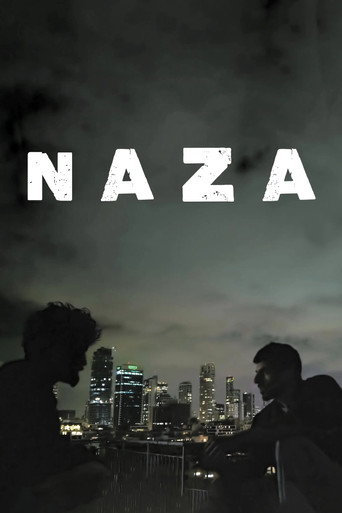
The documentary NAZA, directed and conducted through nighttime interviews by Yuval Abraham and Rachel Szor between 2023 and 2025, investigates the technological systems behind military operations in Gaza. Filmed on the rooftops of Tel Aviv, the project features twenty-four Israeli soldiers and intelligence officers appearing only as dark silhouettes with distorted voices to protect their anonymity. These individuals detail how artificial intelligence and extensive mobile phone surveillance were deployed to track and target individuals.
The conversations are interspersed with shots of Tel Aviv at night. The interviewees explain the operational mechanics, including how software categorized potential targets and mapped out military zones, establishing an industrial approach to modern warfare that relied heavily on automated data collection.
What happens at the end of NAZA?
Key takeaways
The documentary NAZA reveals the inner workings of automated target generation and mobile surveillance used by military personnel in Tel Aviv.
Interviewees describe a calculated system where civilian death counts were pre-calculated and authorized through specific numerical thresholds.
One reading of the documentary is that it exposes a chilling normalization of mass violence disguised as routine administrative tasks.
The film concludes with chilling acknowledgments from participants regarding the nature of their actions and the ease of returning to normal life.
The final segment of NAZA deepens the exploration of the mechanics behind the operations, focusing on the human psychological response and the specific terminology used by the officers. An interviewee explains the acronym NAZA, detailing how every potential target was assigned a value representing the expected civilian fatalities resulting from an air strike. Values below twenty required no special authorization, while approvals reached up to five hundred, with combined metrics exceeding the entire population of Gaza.
The narrative moves through descriptions of designated death zones, where Palestinians faced gunfire upon entering, and recounts an incident where starving people were shot at a food distribution point, illustrated through a stick-figure drawing by the speaker. The accounts highlight the phrase Where's Daddy, describing the practice of monitoring hacked mobile phones belonging to children to track when a father returned home so an entire family could be targeted in an air strike. One participant shares a harrowing account of watching a father's daughter burn to death via a hacked device, noting the feeling of hearing everything targets say and feeling like God.
As the documentary reaches its closing moments, the men reflect on the lack of psychological distress in their units, noting that killing felt good and was viewed as a duty driven by the belief that there were no innocents in Gaza. The final sequence addresses the ultimate moral weight of these actions. When directly asked if he had involved himself in a genocide, one interviewee answers yes without hesitation. Another member of an elite unit draws a parallel to the Holocaust, expressing an understanding of how entire buildings and their occupants can be destroyed while perpetrators simply carry on with normal routines, such as completing a university degree in clinical psychology.
What does the ending of NAZA mean?
One interpretation of NAZA is that it serves as an examination of the systems behind calculated mass killing in the digital age. The film explores how advanced technology and artificial intelligence can distance individuals from warfare, turning the loss of human life into an everyday office job. Another central theme is the normalization of violence within military structures, where participants view their actions as a duty while maintaining a detached sense of normalcy.
Furthermore, the documentary touches upon accountability and moral reflection, as participants discuss their roles in these operations. Ultimately, the ending presents the psychological architecture required to sanction mass violence and the ease with which perpetrators integrate these acts into their personal lives.
Average audience ratings from the source database. Click a title to read its ending explained.
NAZA ending FAQ
Who conducted the interviews in NAZA?
The interviews were conducted by Yuval Abraham and Rachel Szor on rooftops in Tel Aviv between the years 2023 and 2025.
What does the acronym NAZA represent in the context of the documentary?
The acronym represents a value assigned by AI software to potential targets, indicating the expected number of civilian fatalities in an air strike.
How are the interviewees shown in NAZA?
The participating soldiers and intelligence officers are shown exclusively as dark silhouettes with their voices distorted to conceal their true identities.
What surveillance methods are revealed in NAZA?
The interviewees reveal the use of mobile phone surveillance that granted access to cameras and microphones, including devices belonging to children in Gaza.
Does anyone in NAZA admit to participating in genocide?
Yes, when directly asked whether he had been involved in a genocide, one of the interviewed soldiers answers yes without any hesitation.
Once Upon a Time in the Middle East ending explained
Seeking a fresh start, chef Xu Fu travels to the Middle East to support his family and repay his debts. Alongside restaurant manager Ma Junsheng, he transforms the struggling Drago