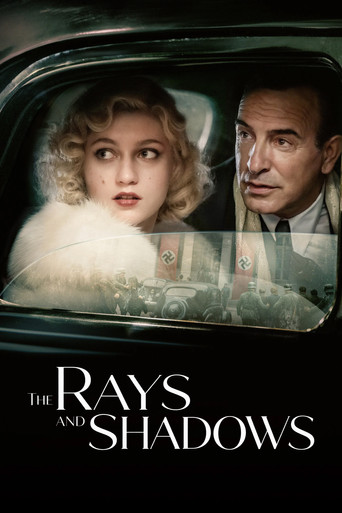
Set against a backdrop of historical tension, The Rays and Shadows introduces Jean, a French newspaperman, and Otto, a young German Francophile, who initially unite in their shared fight for peace in Europe. Alongside them, Jean’s daughter, Corinne, begins establishing a brilliant acting career within the vibrant film world. However, this fragile peace shatters when war breaks out and France falls under enemy occupation.
This cataclysmic shift forces both Jean and Otto into powerful new positions within the altered political landscape of this occupied France. Jean rises to become a prominent press baron, emerging as an ardent advocate for collaboration with the occupying forces. Meanwhile, Otto ascends to a position of immense political weight, becoming the Reich’s ambassador stationed in Paris. As these former allies find themselves on opposing or dangerously entangled sides of a compromised nation, Corinne is suddenly cast into a perilous environment often described as the lion’s pit, threatening both her safety and her burgeoning artistic ambitions as historical pressure mounts around everyone involved.
The historical drama The Rays and Shadows details the strained relationship between former peace advocates Jean and Otto during the occupation of France.
Jean transitions into a prominent press baron advocating collaboration, while Otto assumes the role of the Reich’s ambassador in Paris.
Corinne navigates a dangerous path trying to build her acting career amidst the turmoil and political pressure of occupied France.
Because the narrative focuses on the mounting historical pressure without providing a closed sequence, the story ultimately leaves its final resolution open.
As the historical drama The Rays and Shadows progresses into its final act, the narrative focuses heavily on the starkly diverging paths of Jean, Otto, and Corinne under the heavy shadow of the occupation. Jean solidifies his controversial status as a press baron fully committed to collaboration, utilizing his media influence to shape public perception in occupied France. Otto operates from a position of high authority as the Reich’s ambassador in Paris, maintaining a complex dynamic with his former friend.
Corinne struggles to survive and maintain her acting career inside the treacherous environment of the occupied film industry. Because the available historical and narrative source materials conclude their accounts at this critical juncture of mounting peril and compromised allegiances, the film leaves the ultimate fates of Jean, Otto, and Corinne explicitly open. Rather than providing a definitive resolution or spelling out the final consequences for the characters, the story concludes without revealing whether collaboration brings ruin or survival, or how the perilous situation in the lion's pit ultimately breaks for Corinne.
The narrative similarly leaves untold the final historical trajectory for Otto in his capacity as ambassador and Jean as a press baron. One interpretation of this open-ended conclusion is that the film deliberately refuses to offer neat narrative closure for a historical era defined by moral ambiguity and compromise. Instead of neatly wrapping up the personal and political conflicts established in the opening acts, the final scenes leave the characters suspended in their precarious reality.
The audience is left to ponder the heavy tolls exacted by the choices made by Jean and Otto, as well as the harrowing environment surrounding Corinne. Ultimately, the story resists offering a simplistic moral verdict, allowing the weight of the historical occupation to linger indefinitely in the minds of the viewers without a tidy final resolution.
What does the ending of The Rays and Shadows mean?
The Rays and Shadows explores profound themes of moral compromise, the fragility of peace, and the corrupting nature of power during wartime. One reading of the narrative is that it highlights how easily former advocates for peace can be co-opted by totalitarian systems, as demonstrated by Jean's shift into a pro-collaboration press baron and Otto's rise as the Reich’s ambassador. The film uses their divergent paths to examine collaboration not merely as a simple act of betrayal, but as a complex web of survival, ambition, and ideological realignment under occupation.
Furthermore, Corinne’s struggles in the film world represent the vulnerability of art and innocence when cast into the lion’s pit of political tyranny. By leaving the ultimate fates of the characters unresolved, the thematic core of the movie emphasizes that history rarely offers clean resolutions or easy redemptions. The shadows cast by the war linger over every relationship, suggesting that once moral lines are crossed in the pursuit of power or survival, the consequences extend far beyond what any single narrative conclusion could neatly contain.
How The Rays and Shadows rates against similar titles
Average audience ratings from the source database. Click a title to read its ending explained.
The Rays and Shadows ending FAQ
What is the main conflict in The Rays and Shadows?
The central conflict arises when war breaks out and France is occupied, drastically altering the lives of peace advocates Jean and Otto. Jean becomes a pro-collaboration press baron, Otto becomes the Reich’s ambassador in Paris, and Jean’s daughter Corinne is thrown into a perilous situation within the film world.
How does the relationship between Jean and Otto change?
Initially, Jean and Otto are united as a French newspaperman and a German Francophile fighting for peace in Europe. However, the outbreak of war and the subsequent occupation of France drive them into powerful new roles on compromised sides of the political divide.
What happens to Corinne during the occupation?
Just as Corinne is launching a brilliant acting career in the film world, war breaks out and France becomes occupied. She finds herself thrown directly into the lion’s pit, navigating a dangerous and uncertain environment while trying to pursue her artistic ambitions under intense pressure.
Does the movie provide a definitive ending for the characters?
The story leaves the ultimate fates of Jean, Otto, and Corinne open rather than providing a closed resolution. Because the narrative focuses on their compromises and the mounting historical pressure, it concludes without revealing the final consequences of their actions during the occupation.
What are the roles assumed by Jean and Otto during the occupation?
Jean becomes an influential press baron who actively advocates for collaboration with the occupying forces, while Otto assumes the position of the Reich’s ambassador stationed in Paris.
In communist Czechoslovakia in 1980, 15-year-old Mara dreams of leaving her village to study in the city and become a pilot. But her father, a widowed Ruthenian farmer, insists she