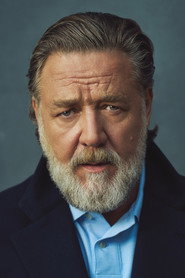
Following the collapse of Nazi Germany, Allied forces take custody of high-ranking officials awaiting accountability. American psychiatrist Douglas Kelley is assigned to evaluate the mental stability of twenty-two detainees in Bad Mondorf, notably interacting with Reichsmarshall Hermann Göring. Meanwhile, Justice Robert Jackson works alongside British barrister Sir David Maxwell Fyfe to establish an international tribunal in Nuremberg to prosecute the leadership for severe war crimes.
Initially, Kelley maintains a civil, sometimes warm rapport with Göring while secretly leveraging their interactions for his own prospective book. As the tribunal commences, the presentation of undeniable camp atrocities shatters any remaining illusions about the regime's actions. After a journalist exposes Kelley's confidential chats with Göring, the psychiatrist is briefly dismissed, but he is soon galvanized by interpreter Howard Triest to hand over his extensive notes to the prosecution team. This crucial evidence arms Jackson and Fyfe with the insights needed to counter Göring's calculated legal defense during the tribunal proceedings.
Hermann Göring evades initial cross-examination before British barrister Sir David Maxwell Fyfe tricks him into confessing his unwavering loyalty to Hitler.
Condemned to death by hanging, Göring evades the gallows on the eve of his execution by ingesting a hidden capsule of cyanide.
Interpreter Howard Triest shows compassion to Julius Streicher before his chaotic execution, and later successfully reunites with his surviving sister.
Traumatized by his involvement, psychiatrist Douglas Kelley returns home, publishes a memoir, and ultimately dies by suicide years later.
The final act of Nuremberg unfolds within the courtroom and the holding cells as the trial reaches its dramatic climax. During cross-examination, Göring cleverly sidesteps Justice Jackson's aggressive questioning, even attempting to reframe the horrifying Final Solution as a mere emigration policy rather than an execution order. This tactic earns Jackson a reprimand from the bench, prompting Sir David Maxwell Fyfe to step in.
Playing upon Göring's immense narcissism and vanity, Fyfe cleverly goads the former Reichmarshall into proudly reasserting his absolute devotion to Adolf Hitler, thereby trapping him before the tribunal. With his defense utterly shattered, Göring is ultimately condemned to death by hanging along with other convicted defendants. Ahead of the scheduled hangings, Kelley visits Göring one last time in his cell, finally reconciling with the chilling reality of the prisoner's true nature.
On the night of October 15, 1946, just hours before he is to face the gallows, Göring evades public execution by swallowing a capsule of cyanide, much to the deep fury of warden Col. Burton Andrus. Despite this shocking evasion, the remaining tribunal executions proceed as planned the next day.
Among them, Julius Streicher suffers a severe nervous breakdown, prompting Howard Triest—who had initially planned to disclose his own Jewish heritage to the condemned man—to gently assist him toward the scaffold. The final execution proves deeply chaotic and grim, requiring weights to be added to Streicher to ensure death. Afterward, a traumatized Kelley travels back to the United States to publish his planned tell-all book, titled 22 Cells in Nuremberg, though he struggles with its promotion.
The closing intertitles reveal the long-term fates of the central figures: Kelley battles severe alcoholism and spends his remaining years issuing unheeded warnings about the resurgence of totalitarianism before dying by cyanide suicide in 1958, mirroring Göring's end. Triest manages a joyful reunion with his sister in Switzerland, while Jackson's tireless work successfully establishes the lasting foundations for modern international war crimes prosecution.
What does the ending of Nuremberg mean?
One central reading of the conclusion centers on the profound psychological toll of confronting unchecked evil. The narrative explores how proximity to fascism corrupts and haunts those tasked with studying or dismantling it, as seen in Douglas Kelley's tragic downward spiral and ultimate suicide using the exact method as his primary subject. Another major thematic current involves the complex nature of justice and accountability.
While the Nuremberg tribunal successfully builds a legal framework for prosecuting international atrocities, the ending emphasizes that legal verdicts cannot fully heal deep societal traumas or erase individual complicity. Furthermore, the film examines the danger of impassivity toward cruelty, a warning voiced by Howard Triest that remains relevant across generations. The ironic parallel between the psychiatrist and the war criminal suggests that moral corruption can stealthily infect even those who believe they are merely observing or exploiting history for personal gain.
Average audience ratings from the source database. Click a title to read its ending explained.
Where to watch Nuremberg
How
Available on
Stream
Amazon Prime Video, Amazon Prime Video with Ads
Rent
Apple TV Store, Amazon Video
Buy
Apple TV Store
Listed for region IN. Availability varies by country.
Nuremberg ending FAQ
How does Hermann Göring die in the film?
Hermann Göring dies by suicide on the night before his scheduled execution by ingesting a hidden capsule of cyanide in his cell, successfully evading the gallows.
Why does Douglas Kelley hand over his private notes?
Douglas Kelley surrenders his confidential notes after interpreter Howard Triest confronts him about the deadly cost of remaining impassive toward fascist cruelty, urging Kelley to aid the prosecution.
What happens to Julius Streicher at his execution?
Julius Streicher suffers a severe nervous breakdown before his hanging. Howard Triest gently helps guide him to the scaffold, and the execution goes poorly because weights must be added to ensure death.
Does Howard Triest survive the aftermath?
Yes, Howard Triest survives the postwar period and eventually manages to successfully reunite with his younger sister who had earlier escaped safely to Switzerland.
What is the ultimate fate of Dr. Douglas Kelley?
Dr. Douglas Kelley returns to the United States, struggles to promote his tell-all memoir, battles alcoholism, and ultimately commits suicide by ingesting cyanide in 1958.
Where can I watch Nuremberg?
Stream: Amazon Prime Video, Amazon Prime Video with Ads. Rent: Apple TV Store, Amazon Video. Buy: Apple TV Store. Availability listed for region IN and varies by country.
Nuremberg cast
Actor
Character
Rami Malek
Douglas Kelley
Russell Crowe
Hermann Göring
Michael Shannon
Justice Robert H. Jackson
Leo Woodall
Sergeant Howie Triest
John Slattery
Colonel Burton Andrus
Richard E. Grant
Sir David Maxwell-Fyfe
Mark O'Brien
Colonel John Amen
Colin Hanks
Dr. Gustave Gilbert
Movie
★ 8.0
David ending explained
From the songs of his mother’s heart to the whispers of a faithful God, David’s story begins in quiet devotion. When the giant Goliath rises to terrorize a nation, a young shepherd