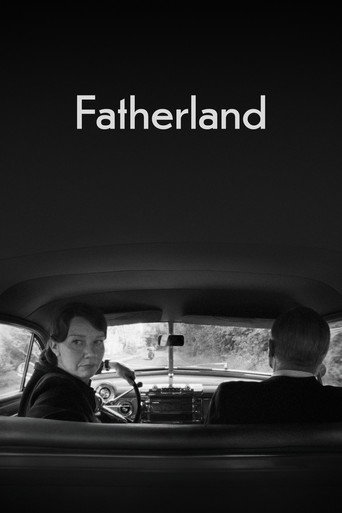
In the summer of 1949, renowned writer Thomas Mann and his daughter Erika set out on a transformative road trip across a shattered Germany, moving from the US-controlled zones to Soviet-occupied territory. Klaus Mann reaches out from Cannes to express his artistic despair, though he hesitates when invited to join them. Upon reaching West Germany, Erika intercepts hostile letters branding her father a traitor to his homeland.
During a press gathering where Erika translates for Thomas, questions arise regarding his planned trip to Weimar to receive another Goethe Prize and the potential backlash he might face upon returning to America. Undeterred, Thomas maintains that literature and art transcend modern political borders. At a subsequent reception, Thomas declines a request from Richard Wagner's grandsons to rehabilitate the Bayreuth Festival.
Meanwhile, Erika confronts her former husband Gustaf Gründgens, a former Nazi collaborator, resulting in a public slap. Back at the hotel, tragedy strikes when they learn of Klaus's death by suicide. Despite this devastating loss, Thomas resolves to press forward with the scheduled itinerary.
Thomas and Erika Mann navigate a deeply fractured post-war Germany during their 1949 road trip.
The tragic suicide of Klaus Mann casts a heavy shadow over their journey into Soviet-controlled territory.
A quiet moment inside a ruined church provides a profound emotional release for the grieving family.
The story ultimately reflects on the enduring power of art and literature amid national division.
Arriving in Weimar for the second leg of their journey, Thomas and Erika are greeted by a large procession led by cultural official Johannes R. Becher and Soviet propaganda director Sergei Tiulpanov. The packed itinerary includes lavish banquets and a children's choir performing a proposed pan-German anthem that repeats the word fatherland.
Amid these official events, a stranger manages to reach Thomas's hotel room door to implore him to use his upcoming speech to expose the Soviet detention of political prisoners at the former Buchenwald camp, though the man is quickly dragged away before any further action can be taken. During the formal ceremony, an overwhelmed Erika walks out before her father finishes addressing the crowd, spending time wandering the grounds of their lodging alone. Later that night, Thomas discovers her resting in bed while still grieving the loss of her brother, and he shares that he has dreamt of Klaus.
The following day, as they travel back toward Frankfurt, their vehicle passes a heavily damaged church, prompting the two to explore the structure independently. Stepping inside the skeletal remains of the building, they discover a pair of men working on an organ. As the musicians begin playing a Bach piece, Thomas is overcome with emotion and sheds tears while Erika takes hold of his hand in a silent gesture of comfort and solidarity. The narrative concludes with this poignant musical interlude inside the ruined sanctuary, leaving the characters united in their shared sorrow and reflection.
What does the ending of Fatherland mean?
One major reading of the ending of Fatherland is that it emphasizes the solace found in enduring culture amidst total devastation. The ruined church serves as a powerful metaphor for a fractured nation, yet the functioning organ and the timeless music of Bach suggest that art survives even when physical and political structures crumble. The tears shed by Thomas Mann represent a release of the immense grief and pressure he has carried throughout the journey, amplified by the loss of his son Klaus.
Erika holding her father's hand signifies familial endurance and unity in the face of insurmountable tragedy. Rather than offering neat political resolutions, the story resolves on an intimate, emotional note. The grand ideological pageants of the state give way to private sorrow and artistic appreciation, suggesting that true human connection and cultural legacy matter far more than political borders or anthems.
Average audience ratings from the source database. Click a title to read its ending explained.
Fatherland ending FAQ
What is the main premise of Fatherland?
The film follows exiled German writer Thomas Mann and his daughter Erika on a 1949 road trip across a ruined Germany from Frankfurt to Weimar.
Why do Thomas and Erika travel to Weimar?
They travel to Weimar so Thomas can receive a Goethe Prize, despite controversies and warnings about potential political repercussions.
What happens to Klaus Mann during the trip?
Klaus Mann tragically dies by suicide in an apartment in Cannes shortly after speaking with his sister Erika by phone.
Does Thomas Mann mention the political prisoners at Buchenwald in his speech?
The story leaves open whether he addresses the issue, as a petitioner is dragged away and Erika walks out of the hall before the speech concludes.
What is the significance of the final scene in the ruined church?
Listening to Bach inside the bombed-out church provides Thomas and Erika with a moment of emotional release and shared grief amid national devastation.
From the songs of his mother’s heart to the whispers of a faithful God, David’s story begins in quiet devotion. When the giant Goliath rises to terrorize a nation, a young shepherd