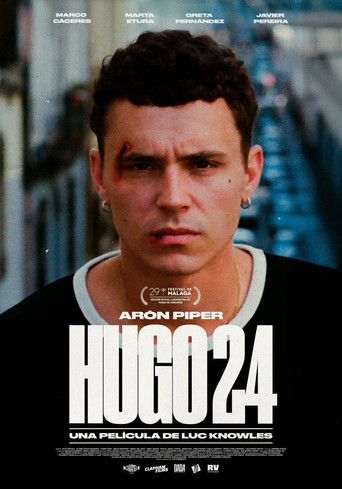
Hugo is twenty-three years old and desperately struggling to transition into adulthood just as his life begins to unravel around him. On the eve of his twenty-fourth birthday, he finds himself entirely unemployed yet desperately seeking a prestigious real estate job. Securing this position would allow him to wear a tailored suit, a deeply symbolic aspiration connected to his absent father.
Beneath this professional ambition lies a profound terror of abandonment. His mother remains incarcerated, his romantic relationship is actively dissolving, and his broader family structure is completely collapsing. Compounding this immense personal pressure, his landlord delivers a severe ultimatum, threatening a strict eviction within a mere twenty-four hours.
This triggers a frantic, high-stress race against the clock. Throughout the narrative, Hugo navigates these overlapping crises, pushing him toward a definitive, high-stakes collision with the harsh realities of growing up and facing his deepest fears alone.
What happens at the end of Hugo 24?
Key takeaways
The narrative centers on a frantic twenty-four-hour countdown as Hugo faces an imminent eviction.
The film explores the painful transition into adulthood against a backdrop of deep-seated abandonment fears.
Because the available source details focus entirely on the setup, the final resolution of the story is left deliberately open.
As the final hours of the twenty-four-hour countdown tick away in Hugo 24, the tension reaches its absolute peak. Hugo finds himself cornered by the compounding pressures of his impending eviction, his failing relationship, and the heavy emotional ghost of his absent father. The film pushes its protagonist through a grueling sequence of events where every second brings him closer to a breaking point.
Yet, because the core source materials and initial setup focus exclusively on the triggering events of his crisis, the narrative ultimately leaves the specific details of the final scenes open. Instead of providing a definitive, neatly tied-up conclusion, the story concludes without explicitly confirming whether Hugo successfully secures the real estate job, manages to pay off his strict landlord, or reconciles with his imprisoned mother and departing girlfriend. One reading of this ambiguous structure is that the twenty-four-hour duration itself serves as the true emotional climax.
Rather than focusing on concrete resolutions, the closing moments capture the raw, ongoing weight of his anxiety, emphasizing the painful uncertainty of stepping into adulthood. The final image of the film lingers on this unresolved tension, refusing to offer easy answers about his future. The narrative fades out while Hugo remains suspended between his fractured past and a terrifyingly blank future, leaving audiences to interpret whether he will ultimately sink or swim under the immense weight of his responsibilities. The closing beats prioritize atmosphere and psychological distress over traditional narrative closure, ensuring that the central themes of abandonment and time-running-out resonate long after the screen goes dark, leaving the ultimate fate of the protagonist entirely open-ended.
What does the ending of Hugo 24 mean?
The central themes of Hugo 24 revolve around the agonizing psychological burden of forced maturation and the paralyzing fear of abandonment. Throughout the narrative, the ticking-clock format serves as a physical manifestation of time slipping away, forcing the protagonist to confront his arrested development. His obsession with wearing a suit for the real estate interview highlights a deep desire to inherit the identity of his absent father, bridging an emotional gap left by a fractured family.
Furthermore, the film explores how systemic instability, represented by his mother's imprisonment and the impending eviction, isolates individuals on the precipice of adulthood. One interpretation of the overarching meaning is that true maturity does not arrive through a sudden professional triumph, but rather through the painful realization that one must learn to stand independently amidst chaos. By refusing to provide a tidy resolution, the story suggests that life's most daunting transitions rarely wrap up neatly. Instead, the narrative emphasizes that confronting one's deepest insecurities is an ongoing, lifelong process rather than a single destination reached within a twenty-four-hour window.
Average audience ratings from the source database. Click a title to read its ending explained.
Hugo 24 ending FAQ
What triggers the main crisis in Hugo 24?
The primary crisis is triggered when Hugo's landlord threatens him with a strict eviction notice that must be resolved within a chaotic twenty-four-hour window, forcing him to confront his overwhelming personal and financial instability.
Why is the real estate job interview so important to Hugo?
The real estate interview represents his ultimate dream job because securing it would allow him to wear a tailored suit, serving as a powerful emotional connection to his absent father and a stepping stone toward adulthood.
How does the story resolve the conflicts at the end?
The narrative leaves the final resolution completely open, choosing not to explicitly confirm whether Hugo secures the job, stops the eviction, or repairs his broken relationships, focusing instead on the heavy emotional weight of the journey.
What role does Hugo's family play in his struggles?
His family contributes heavily to his deep fear of abandonment, as his mother is currently in prison and his overall family structure is falling apart, compounding the immense pressure he faces during his frantic twenty-four-hour countdown.
Does the film provide a clear answer about his adulthood?
Instead of offering a definitive answer, one reading suggests the story highlights the ongoing, painful process of growing up, leaving the protagonist suspended between his fractured past and an uncertain future without neat narrative closure.