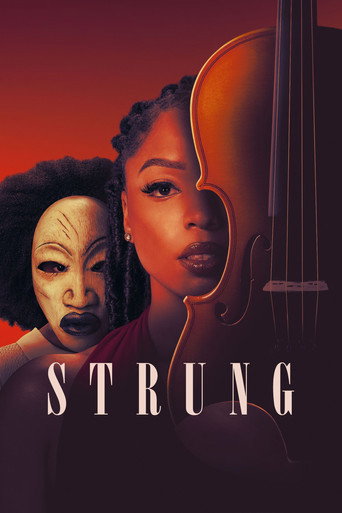
The film Strung follows a cynical man named Thane Furrows inside his Texas apartment as he spends the day grumbling about minor grievances like flies, junk mail, and salesmen. Thane holds eccentric philosophies, writing bizarre children's books and refusing real pets in favor of a cardboard cutout of a dog named Pete. Throughout the day, he interacts with his friend Al, insults his boss's wife, and loses an arm-wrestling match to his noisy upstairs neighbor before cutting the neighbor's power.
Alongside these frustrations, Thane is haunted by visions of a menacing face and receives persistent warnings pointing toward eight o'clock. When a knock finally arrives at that exact hour, Thane steps outside and enters a limousine waiting at his door, setting the stage for a bizarre confrontation that challenges everything he thought he knew about his daily routine and his ultimate survival.
What happens at the end of Strung?
Key takeaways
Thane Furrows spends a frustrating day dealing with minor annoyances before a mysterious appointment at eight o'clock.
A limo driver reveals himself to be Death, claiming Thane must die because of his repeated statements wishing for death.
After failing to frighten Thane, Death returns him to his body, and Thane shares a bowl of cereal with his friend Al.
An epilogue reveals Death refuses to ever return for Thane, leaving open the implication that Thane has become immortal.
The final act begins when Thane enters the limousine at the dreaded eight o'clock hour and meets the driver, who reveals himself to be Death. Death informs Thane that he has accumulated too many casual statements expressing a wish for death and therefore must pass away. Thane responds with characteristic cynicism, complaining about the rules and arguing with Death over the absurdity of the situation.
Unable to genuinely frighten Thane into submission or compliance, Death eventually relents and transports Thane back to his earthly body. Thane suddenly gasps awake inside his apartment, with a frightened Al standing directly over him and trying anxiously to rouse him from his lifeless state. The immediate crisis passes, and the narrative shifts as the two men decide to venture out to a local restaurant together.
At the eatery, Thane insists on ordering cereal, showing a slight willingness to embrace new experiences while stubbornly holding onto his familiar habits. This seemingly normal outing appears to wrap up the main narrative arc of the film. However, a post-credits epilogue offers a bizarre twist on these events.
In this final scene, Death stops his limousine within a dark, desolate space and gazes up toward the heavens. Death remarks aloud that he simply could not tolerate Thane's personality and therefore chose to return him to life rather than deal with him any longer. Death adds that he is never coming back for Thane under any circumstances. This closing moment leaves viewers with the strong implication that Thane's stubborn annoyance of Death may have accidentally granted him a strange form of immortality.
What does the ending of Strung mean?
One reading of the ending is that it serves as a dark comedy about the unpredictable nature of mortality and the annoyance of everyday existence. Thane's cynical outlook protects him, ironically, because his annoyance outweighs even Death's patience. The resolution explores themes of appreciation for life, though Thane's stubborn demand for cereal at a restaurant suggests he has not completely changed his ways.
The narrative plays with the idea that our casual complaints carry literal weight, only to subvert it when bureaucratic cosmic rules fail against an irritating personality. One interpretation is that immortality is not a reward bestowed upon a hero, but rather an administrative punishment handed down by a frustrated cosmic entity who simply wants some peace and quiet.
Trying to escape her past, Millie Calloway accepts a job as a live-in housemaid for the wealthy Nina and Andrew Winchester. But what begins as a dream job quickly unravels into som